MANAGE YOUR COOKIE PREFERENCES

We use necessary cookies to make our site work and to give you the best possible experience. If you are happy for us to do so, we would also like to set optional analytics cookies to help us improve this site by collecting and reporting information on how you use it. We won’t set these optional analytics cookies unless you tell us it is OK to do so using the tick box below.

For more information on how any of our cookies work, please refer to our privacy policy.

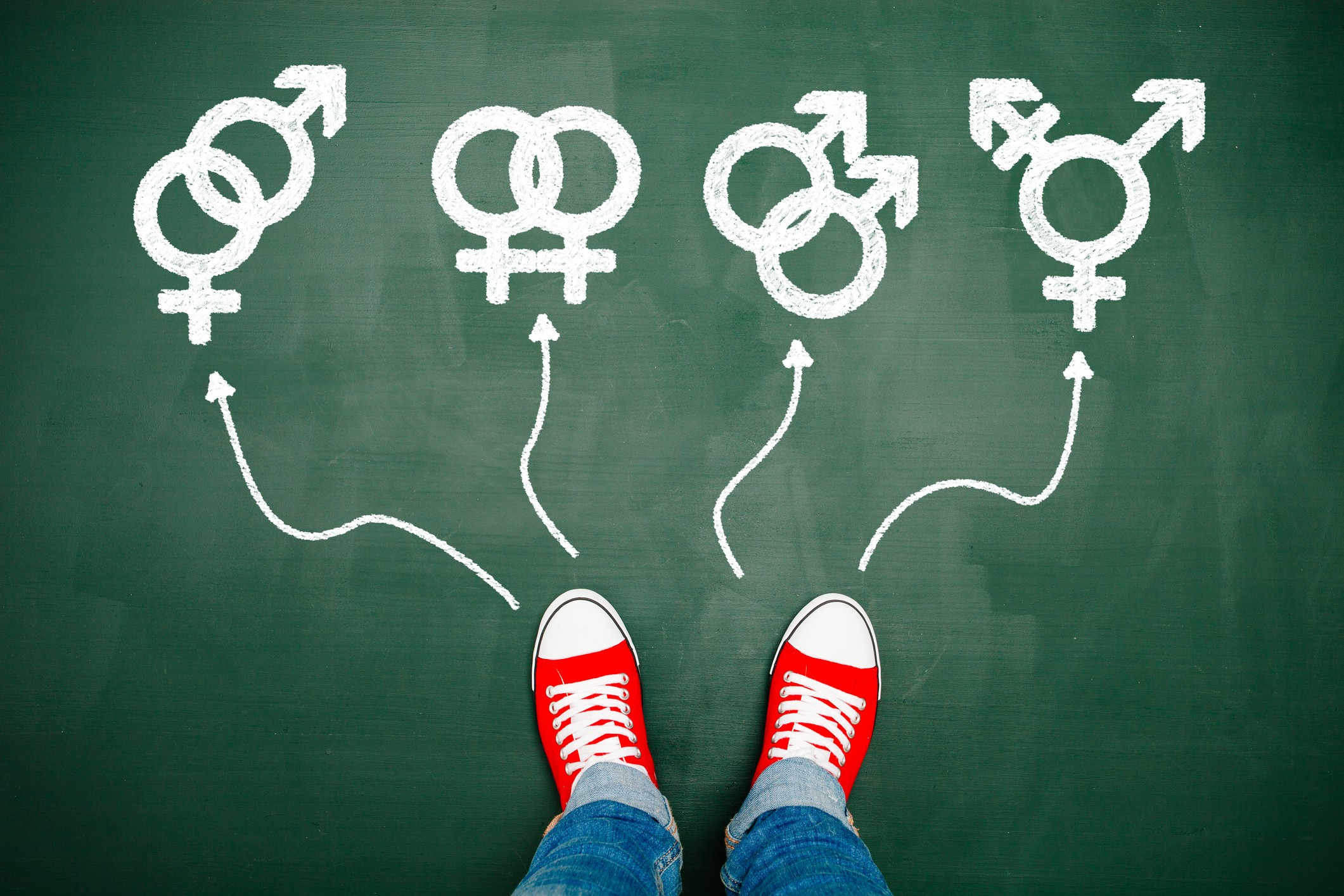
Celebrating Transgender Awareness Week

Today’s guest blog comes from Natalie Gardiner, the Strategic Leader for Transgender Services for a large integrated health care organization serving nearly 4 million members.

Transgender Awareness Week (November 14-20) is a time to celebrate, build awareness, and take action against discrimination and violence facing transgender communities. Given the recent election and an atmosphere of intolerance, this could not come soon enough.

Bullying is up—so closely tied with this election that the Southern Poverty Law Center deemed it the “Trump Effect”—and so are calls to LGBT crisis support hotlines. Dr. Diane Ehrensaft, Director of Mental Health at UCSF’s Child and Adolescent Gender Center, captured the sentiments of her young clients, “They feel anxious and scared and they feel betrayed. What’s going to happen to me? Will I be beaten up at school?”

So what should transgender youth and their allies—their parents, family members, friends, teachers, and other professionals—do?

Recognize the raw emotion. Whatever you may be feeling—anger, grief, betrayal—that feeling is real. Dr. Ehrensaft says, “We all want to jump in and say it’s ok but [kids] need room to say ‘It’s not ok.’”

Get immediate professional support if you need it. Talk to a professional if you are feeling anxious, depressed, or having thoughts of suicide. If you or a loved one needs immediate help, call:

  • Trevor Project (866-488-7386) or visit their website
  • Trans Lifeline (877-565-8860)

Surround yourself in community and family support (and, if you’re an ally, be affirming). Isolation can heighten feelings of depression, loneliness, and anxiety. “This is the time that a collective experience is critical” says Dr. Ehrensaft. Spend time with supportive parents, friends, or family members. Meet up with a local transgender youth community group. If there is not one in your area, join a virtual community group like The Gender Spectrum Lounge or TrevorSpace.

For parents and other allies, provide affirming support. “The critical issue is that we have their backs right now,” says Dr. Ehrensaft. There are great resources available to help you build affirming environments at home, in schools, and beyond:

Celebrate and raise awareness. With Transgender Awareness Week commencing, you can get involved to celebrate your (or a loved one’s) experience, raise awareness, and take action. Here are how some organizations are providing these opportunities:

Transgender Awareness Week “is the time that the spotlight is for you,” says Dr. Ehrensaft. “You will be seen and heard. You are special and we will celebrate that and make sure that keeps happening.”

We Are Here For Each Other: Practicing Kindness Every Day at Kids’ Food Basket

Today’s guest blog comes from Bridget Clark Whitney, the Executive Director of Kids’ Food Basket. This November we are thrilled to shine light on this incredible organization. Their mission is to nourish children so they can do their best in school and in life. Find out more about their work and get involved here: http://www.kidsfoodbasket.org/
2016-11-09_13400When I was a little girl – around the same age my daughter Madeline is now, a precocious four-and-a-half – I remember feeling deeply troubled about what I should be doing with my life. I was watching all of these adults around me doing their jobs, hustling and bustling around, and I felt this huge sense of fear and confusion. What should I be doing? Shouldn’t I be doing something important?

Like most four-year-olds, I ran to my mother crying. Between tears, I blurted out: “Why are we here, mom?”

I’m not sure what kind of response I was looking for, but I’ll never forget what my mother said: “We are here for each other.”

I’ll also never forget how she said it, like it was the simplest thing in the world. Of course, I thought. We are here for each other.

I didn’t know it then, but this idea, that we are here for each other, is the foundation I would build my life on. It’s the idea that has influenced me to dedicate my life to working on social justice issues and society’s most pressing problems.

Both my parents taught me a strong sense of right and wrong, and have lived their lives with uncompromising integrity, expecting me to do the same. Neither of them grew up in families with financial privilege, but they believe, and have taught me to believe, that the love of family and friends makes us rich beyond belief. My parents raised me to be an honest, hard-working, passionate, compassionate, kind, committed citizen. As a young child they would take me to volunteer in soup kitchens and community centers, teaching me that we can all make a difference; that we can all be great through service to one another.

As a young adult, I chose to go to Aquinas College in Grand Rapids, which has a fantastic Community Leadership Program. Grand Rapids was a whole different world from where I grew up, first in Pittsburgh, and then in Detroit. At Aquinas, I had the fantastic opportunity to study abroad in Ireland.

Ireland was all that I thought it would be. It was a fantastic adventure. I made friends with the locals, I loved the landscape. Toward the end of the semester, I thought to myself: “I think I’ll stay here.”
And I did.

If you asked me then how long I thought I’d stay there, I would have sworn on anyone’s grave that it was going to be forever. I loved Ireland.

And then I got a phone call from my college advisor. It went something like this:

“Bridget Clark, you need to come back and finish school. You only have a year left. All you need to do is one capstone project. And I have such an amazing project for you! My friend Mary K. Hoodhood recently started this initiative to provide dinner to hungry kids after school. She needs someone to run it. I think you’d be very good at it.”

I hung up the phone. I thought about those hungry kids. I thought about this lady, Mary K., who needed my help. And I immediately knew what I had to do.

We are here for each other.

Four days later I was on a plane, headed home. During those four days, I researched what childhood hunger looked like in Kent County, where Grand Rapids is located. It couldn’t be that bad, right? Grand Rapids is a pretty nice city. I was devastated to find that, in 2008, there were over 30,000 children living below the poverty level. I also learned that childhood hunger has devastating effects on brain development. If kids don’t have consistent access to good nutrition before they’re twelve, the effect on their brains is almost irreparable.

We are here for each other. We are here for each other. We are here for each other.

In my first year of work with Kids’ Food Basket – this little organization determined to ensure that kids didn’t go to bed hungry – I was shook to my core by the immense need in my community. It was vast, immense, and deeply complex. I knew that we had the responsibility to achieve significant growth. In fact, it would have been irresponsible not to.

From day one, I was 100% committed to this work, because I saw both the immense need and the immense impact on a daily basis. During the first few weeks we served Sack Suppers, a principal contacted us and told us that they had a little girl who kept bringing parts of her Sack Supper to school the next day: sometimes the carrots, sometimes the sandwich. When they asked her why, she said she always saved some, because she was never sure if she would have food at home. The principal called to thank us, because they were able to tell the little girl that she would always get dinner now, every single week night, because of the kindness of the volunteers at Kids’ Food Basket.

The only job I’ve had after college has been directing Kids’ Food Basket, and I have stayed for two simple reasons: this work is critical, and the community we create every day here is amazing.

At Kids’ Food Basket, we empower communities to attack childhood hunger so that young people can learn and live well. We serve over 7,500 children a nutritious, ready-to-eat Sack Supper every week night. Every Sack Supper is locally funded, decorated, packed, and delivered by volunteers who care. We also engage youth in our Kids Helping Kids program, with the firm belief that while 1 in 5 kids in Michigan may experience hunger, 5 in 5 have the power to help change that. We know that this world is messy: poverty is complex, and there are many reasons children may be hungry. It’s so important that we care for each other in these messy times, and Kids’ Food Basket has become an engine for that.

I have had to learn how to become extremely competent in leadership, strategic planning, managing budgets, program development, human resources, fundraising for a budget that has grown from $20,000 to $4.2 million, public relations, volunteer management, food procurement, and childhood hunger issues in a relatively short period of time. I have gone from leading a staff of one to creating jobs for a staff of 29, dozens of interns, hundreds of committee members, and an extremely dedicated board of directors.

In other words: I have had to be scrappy and fearless and brave. Because I am here for these kids, all 7,500 of them that we now serve every weeknight in three West Michigan cities, and the thousands and thousands who remain on our waiting list. I am here for them.

And when this work gets tiring (which it does!), all I have to do is watch our volunteers, ages 5 to 95, at work. Kids’ Food Basket is a kindness factory. When we first started out 15 years ago, we had about 20 dedicated volunteers that came to help pack Sack Suppers for the three schools we served. I thought that was great! Look, 20 people care about childhood hunger!

Now, we see about 250 every single day between our three locations. In the course of a year, we’ll see over 15,000 different people, all of them ready to pack a Sack Supper for a child they’ve never met, their hearts overflowing with compassion and kindness.

I love that our volunteer program at Kids’ Food Basket brings together people of all backgrounds, beliefs, and abilities. On any given day, we might have a religious group volunteering next to a group with physical disabilities next to a group of kids from one of the schools we serve. Or a group of coworkers from a bank next to some college kids next to a political campaign staff. And all of them are getting along and laughing as they make sandwiches, cut veggies, mix trail mix, and pack Sack Suppers, because they are committed to one goal, one great act of kindness: ensuring that our communities’ kids have the nutrition they need to thrive – in and beyond the classroom.

When I watch our volunteers hard at work, there is always a little voice in the back of my head saying: We are here for each other. We are here for each other.


Creating a Country of Kindness

When Lady Gaga spoke last week, she said things that were true then and, somehow, have become even truer today. She said if we are genuine Americans (and we are, all of us) we must go from viewing people we disagree with as adversaries to viewing them as allies. We need to stand together, for ourselves and for each other.

We need to grieve together. We need to celebrate together. We need to strategize together. We need to mobilize together. We need to hear each other and we need to see each other. We need to comfort and we need to be comforted. We need to listen and we need to be listened to.

To choose good, to choose kindness, to choose community, to honor people that disagree with you – whose opinions run contrary to all that you believe to be true about the world – is not an easy choice. But we don’t want to make the easy choice. We want to make the best choice. We want to make the brave choice.

We believe now, as we have always believed, that America is not America without its people. We need America, and America needs us. One person does not define America. We define America.

Bravely Yours,

Maya Enista Smith

Executive Director

Kind Monsters EDU

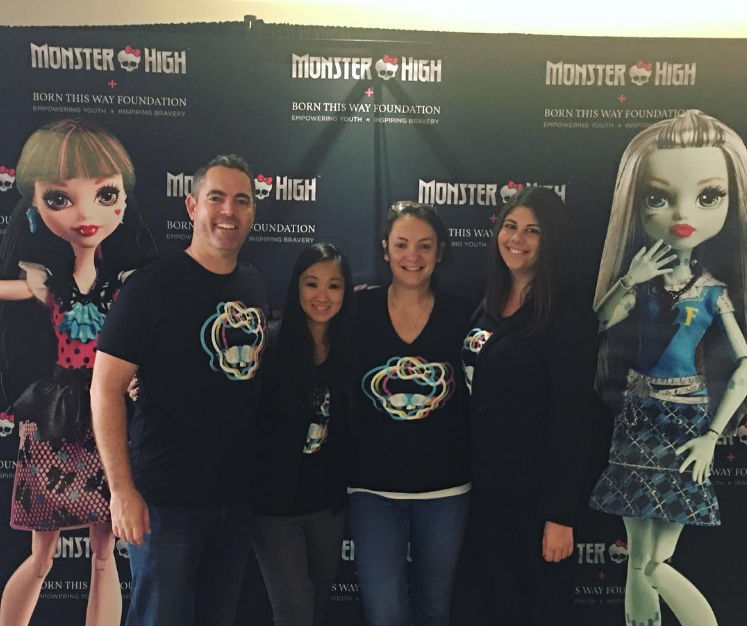
On Thursday, October 27th Born This Way Foundation and Monster High hosted our very first Kind Monsters EDU event. Along with 150 middle school students from the LA area, we spent the day embarking on some creative problem solving to improve their schools.

The morning began with the students getting to hear first hand from a designer from Monster High exactly how the brand was created. Each Monster High Doll is different and unique however, they are all accepted for who they are.

(Here at Born This Way Foundation, we’re so proud to have our very own Monster High Doll, Zomby Gaga, modeled after our co-founder Lady Gaga!)

This got the brain juices flowing as the students were then able to create their own perfect “Monster Student”. Using everything from pipe cleaners to Play Doh, our teams were able to stand by and watch the creativity spark.

The students worked together with peers from different schools to come up with stories and backgrounds for their own “little monsters”.

My favorite part of the morning was getting to hear all of the stories and traits that the young people created for their monsters. Hearing descriptions using words like “kind, brave, different, happy, loyal and trustworthy” was so encouraging.

The afternoon absolutely blew me away.

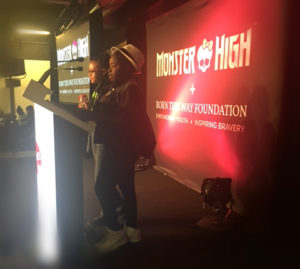
I spent the week leading up to Kind Monsters being so afraid to facilitate my first event. I was so nervous about getting up in front of people and speaking and I was terrified of embarrassing myself. However, when I got to hear dozens of students from the participating schools stand up on stage and tell a room full of their peers, teachers and principals exactly what they want to change in their school and how they plan on changing it; I was inspired by each and every one of them.

kind-monsters-edu-in-blog-imageRepresentatives from each school spoke about about problems like bullying, violence, cliques and a lack of inclusivity in their schools and then told us all how they plan on fixing these problems.
Each student who spoke was poised, prepared and passionate about making a change.

I am so thankful I was given the opportunity to help plan and facilitate this event. And I left excited to continue working with these students and help them change the cultures and climates in their schools.

If you want to be a part of the Kind Monsters movement, you can take the #KindMonsters pledge!

I hope you’ll be a part of our mission to make every school kinder, braver and more inclusive.

Hispanic Communities and Mental Health

According to a Pew Research Center analysis of U.S. Census Bureau data, about one-third, or 17.9 million, of the nation’s Hispanic population is younger than 18, and about a quarter, or 14.6 million, of all Hispanics are Millennials (ages 18 to 33 in 2014). Despite these numbers, disparities in resources and treatment of mental health in Hispanic communities continue to prevail.

Although Latino youth are one of the fastest growing segments of our population, a parallel increase in knowledge about the different medical and mental health disorders that put Latino youth at risk for poor development, quality of life, and adult health is limited. Without efforts to understand how Latinos cope with mental disorders, what factors influence their access to mental health services, and how to deliver high quality mental health care to this population, Latinos will continue to suffer disproportionately from unmet mental health needs.

While discussions on the topic of mental health and well-being may seem like they have made their way into our everyday conversations, it remains a controversial issue in some communities, particularly the Hispanic community. Further, there is almost no literature on treatment preferences among minorities and their families, underscoring the importance of developing such a line of inquiry.

Despite these barriers, there are organizations and professionals in the field who are increasing our understanding of the existing barriers within this growing demographic. Among them is Born This Way Foundation’s Research Advisory Board, who has developed the Born Brave Experiences (BBE) survey.

The BBE is a series of studies focused on improving our understanding of the factors that influence youth engagement, mental health, and emotional well-being.

Now in its third year, studies conducted from the Born Brave Experiences survey have been presented locally at the University of Nebraska’s 2016 Bullying Prevention Conference and nationally at the American Psychological Association (APA) Convention (2014, 2015, and 2016), the 2016 White House Conference on Bullying Prevention, and the National Association of School Psychologists (NASP) Convention (2015 and 2017).

This past August, impacto: New York ran a story highlighting the release of the Born Brave Experiences Survey, v 3.0 – Spanish, the first large-scale survey to examine the experiences and mental health of children and young Spanish speakers worldwide. The goals of the Born Brave Experiences Survey, v3.0 are to:

  • Increase access to improve youth mental, physical, and emotional health;
  • Study how to increase personal kindness and bravery;
  • Identify strategies to increase social and emotional learning in classrooms and community agencies that focus on youth wellness;
  • Investigate the mechanisms for better access to mental and emotional health resources for youth and young adults by linking community health agencies, schools, and university counseling centers

Born This Way Foundation is firmly grounded in research and the publication of our studies can help alleviate and forge a path towards a more accepting and understanding Hispanic community.

Through the analyses of surveys and research on the mental and physical experiences of the youth and young adult Hispanic population, we can help create a kinder and braver world for everyone.

By collecting data on the subject and helping to remove the stigma we can shed some light on the mental health and wellness of Hispanic youth and young adults.

If you know any English or Spanish-speaking youth and young adults, between the ages of 13 – 25, who would is interested in creating a kinder and braver world, visit https://bornthisway.foundation/born-brave-experiences-survey/ and have them take the Born Brave Experiences Survey, v3.0!