


Meet Our Youth Advisory Board!
Born This Way Foundation is very excited to announce our second Youth Advisory Board! We cannot wait to work with these bright young minds who will help advise the Foundation on issues facing youth everywhere and serve as ambassadors for our work in their communities and schools. Here’s what Lady Gaga herself had to say to them!
These nine diverse representatives come from around the country and embody a wide range of experiences and backgrounds. They are non-profit founders, youth advocates, community organizers, journalists, educators, peer advisors, and entrepreneurs. Their dedication and passion to the Foundation’s core mission of promoting kindness and bravery is inspiring.
With their help, Born This Way Foundation will expand our ability to reach youth on line, on the road, and down the street. We recognize that the work of building a kinder and braver world takes time, collaboration, and commitment and these new members of our Youth Advisory Board will be essential to accomplishing those goals.
Meet our new Youth Advisory Board Members:
Simone Bernstein
 Simone, a native of St. Louis, Missouri, was inspired to become involved with community service after seeing the outpouring of support her family received when her dad was deployed. Simone and her brother launched VolunTEEN Nation, a national youth-led nonprofit which has connected more than 93,500 youth with service projects. Simone, who is also on the Board of Directors of Youth Service America, has spoken at numerous conferences throughout the world and has a column at the Huffington Post. She was a 2010 L’Oreal Paris Woman of Worth, one of the 2013 Forbes 30 under 30 Social Entrepreneurs, one of Glamour’s 2013 Top 10 College Women, and a 2014 Traditional Home Magazine Classic Woman. Simone sees service and volunteering as key to combining classroom learning with hands-on problem solving in the community.
Adejire Bademosi
 Adejire is a Public Policy and Community Outreach Fellow at Twitter. A Maryland native, Adejire has been a youth advocate for over 15 years. In 2008, Adejire became the first African American woman elected as a student to the Howard County School Board. During her tenure, Adejire increased youth participation in policy committees and advocated for testing reform – efforts which were recognized by TIME magazine. Adejire has also launched FoundHER to support the leadership potential of high school and college women through workshops and mentorship in Boston and New York and has served as a member of the State Farm Youth Advisory Board and as a member of the Brookings Institution Global Citizenship Learning Metric Task Force 2.0. She has been named one of the “24 Under 24 Youth Changemakers” in the United States.
Daniella Cohen
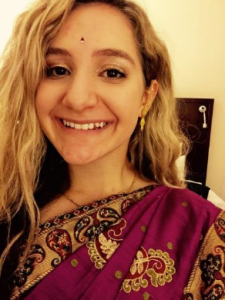 Daniella, a rising junior at Highland Park High School in Illinois, is the co-founder of GIVE. The project funds and installs internet, films educational peer to peer videos, and sends computers, letters, and flip flops signed with messages of hope to schools in India, Uganda and Rwanda. Daniella has spoken at TEDxRedmond about “The Evolution of Lunch Tables,” School 21 in London, the Harvard College Social Innovation Collaborative, and Northwestern University’s “Opportunities for the Future” conference. She has also led Ashoka’s Youth Venture workshops at George Washington University and Marquette University. Daniella has received several awards including the Princeton Prize in Race Relations, Build-A-Bear’s Huggable Hero, Prudential’s Spirit of Community Award, and was a finalist for the Gloria Barron Prize. She was featured in “30 International Social Entrepreneurs,” a documentary by GoYoung and was awarded an Honorable Mention in the White House Student Film Festival for her documentary film “The Impact of GIVE: White House Student Film Festival 2015.”
Ola Ojewumi
 Ola works for a federal agency in Washington, D.C. She is also a contributor for the Huffington Post and her writings have been published by the White House, Marie Claire Magazine, and the American Association of University Women. She founded two nonprofits, Sacred Hearts Children’s Transplant Foundation and the Project ASCEND College Scholarship Program, after receiving a heart and kidney transplant. These efforts have been recognized by the White House, MTV, Glamour, Intel, Essence, and the Huffington Post. Additionally, Glamour has named Ola among the top 10 most influential college women in the United States. Ola previously interned for the White House, Congresswoman Nancy Pelosi, the Democratic National Committee, and Congressmen Albert R. Wynn. Additionally, she has served as Public Policy and International Affairs Fellow at the University of California, Berkeley and as a DNC Hope Fellow.
Dennis Ojogho
 Dennis is a Los Angeles native studying Government at Harvard College. The son of Nigerian immigrants, he is passionate about addressing social justice issues, including mass incarceration, voter disenfranchisement, and education inequality. He has served as an editorial writer for The Harvard Crimson and volunteers as a citizenship tutor, working one-on-one with recent immigrants to help them pass the U.S. Naturalization Test. Dennis ultimately hopes to return to his community to help effect positive social change as a civil rights lawyer.
Jessica Ou
 Jessica is a junior at UC Berkeley studying Business and Social Welfare. She is particularly interested in youth empowerment and gender equity. She has served as a volunteer and peer educator for the Gender Equity Resource Center on campus, where she spread awareness about LGBTQ issues. She also serves on the Youth Advisory Council of the Crisis Text Line, the world’s first 24/7 text-only crisis line for teens. She is also involved in various organizations ranging from Youth Service America to the International Youth Council, striving to empower youth to believe that they have the power to make change.
Gillian Parker
 Gillian is a rising high school senior from California. Her mother introduced her and the rest of her family to the importance of giving back with their annual family foundation meetings where the Junior Board Members give grants and visit a local non-profit to see their impact. Gillian has traveled to Ecuador with other inspiring youth leaders and started a micro-lending business in her host community there. Drawing on her personal experiences – including her father’s suicide – and her passion to improve mental health, she also started her own club to empower her peers and a Shame Share project to pull others out of fear and silence.
Renee Pelletier
 Renee is a rising freshman at Mt. Holyoke College. When she turned twelve, she started to volunteer at her local community center, providing free childcare for parents who were studying to pass their GEDs, and she is still involved today. In her junior year of high school she found the courage to come out of the closet and joined her high school’s Gay-Straight Alliance. She has also become an administrator on the Facebook page Have a Gay Day, a member of the Reconciling Congregations Methodist movement, and a student on the leadership council for the Massachusetts Gay Straight Alliance Network. Through her work with LGBT youth, she recently earned the Elsie Frank Scholarship from the Greater Boston PFLAG.
Christopher Rim
 Christopher, a current psychology major at Yale University, has had an entrepreneurial spirit since the age of 13. After recognizing problems of access for key societal needs, Christopher became interested in designing and building structures to improve community life and access to services. In 8th grade, Christopher founded a tutoring company, Prestige Review Group, which was acquired by a Shanghai-based consulting firm in 2014. At 15, he started the national anti-bullying nonprofit, It Ends Today, Inc., after the suicide of a family friend. He currently oversees over 350 active volunteers in six different countries and is also responsible for facilitating visits to over 400,000 students and counselors every year. Christopher was the state and national recipient of the AXA Equitable Scholarship and has been featured in TIME Magazine, Forbes, Good Morning America, the TODAY Show, and the Huffington Post.
Growing up there were things I “wanted” but nothing that I ever “needed”. I wanted a second helping of spaghetti at dinner. I wanted extra hot fudge on my ice cream for dessert, but I was never in need of any food to eat. Many people are aware of hunger outside of the United States; however, we are often unaware that it’s an issue in our own backyard.
Over 20 million students are entitled to free or reduced breakfasts and lunches in public schools across the U.S. These are often their only meals and during the summer, these kids are even less likely to eat regularly. In addition to the obvious health issues associated with hunger, there is also a stigma that surrounds receiving free or reduced meals at school; which I have witnessed first-hand.
A student I worked with this past year received free lunch daily. He was the youngest of four boys and came to school hungry almost every day. He went to the nurse numerous times throughout the year due to stomach pains and he ate everything that was given to him, even the vegetables, a rarity for any 4th grade student!
One afternoon, I overheard another student ask him why his mom never makes him lunch. I watched his face drop as he quietly responded, “My brothers eat all our food.” While the other student was not fazed by the conversation, this child was visibly embarrassed and uncomfortable.
This type of embarrassment is not uncommon for students who come from struggling families and can lead to serious anxiety. It also represents another reason we need to address the issue of childhood hunger in our own neighborhoods and schools. In a country where 1 in 5 students live in households that do not have consistent access to food, it is time to take a stand and put an end to childhood hunger.
Want to help? Here are some ways that you can work to end child hunger in your area:
- Donate any extra food you have in your home.
- Work with your community to start a community garden that provides fresh fruit and vegetables to local community centers or families in need.
- Volunteer at local food pantries, kitchens and centers.
- Start a food drive in your school or community.
- Educate others about childhood hunger, healthy eating and summer meal programs.
Check out these awesome websites that are working to fight childhood hunger in America for more ways to get involved!
http://www.childhungerendshere.com/
Today’s guest blog comes from Samantha Hanson. She is a graduate student from New Jersey studying psychology. Currently, she works as a teaching aide in an elementary school. She works with Born This Way Foundation on a variety of issues including the Emotion Revolution.
This past Friday, June 26th I was sitting in my office, unable to concentrate on anything and anxiously refreshing my browser every few seconds. I was reading the live feed on SCOTUSblog to see what decisions the Supreme Court was announcing that day and if it would include the Obergfell v. Hodges case on same-sex marriage.
When I saw the words “it’s marriage” appear on the live feed, followed by a short sentence saying that same-sex marriage was now legal across the country, I was stunned. I had gone from nervously trembling with anticipation to being completely still. Even though it was widely speculated that the ruling would come down this way, it was still an incredible moment.
Being that I live and work in Washington, D.C., I was lucky to be able to leave my office and take a cab down Pennsylvania Avenue to the Supreme Court building and join the rally outside. Even though I got there after the decision had been announced, there was still a jubilant crowd. Old and younger, straight and queer, single and married (now in every state), religious and non-theists, we all excitedly celebrated what had up until very recently, seemed unlikely. It was an astonishing opportunity to see a community so diverse in so many ways come together on such an historic day.
What kept coming to the front of my mind, however, was just how momentous this decision was to the people who have been fighting for marriage equality and to end discrimination for decades. It was moving, beyond words, to see people in the crowd on the steps of the Supreme Court who had spent decades fighting for marriage equality and who now saw that come to fruition for the whole country.
I was moved by my friend and her wife whose marriage, while valid in D.C., was ignored each time they went home to visit their family or traveled to any state that didn’t recognize their union. I thought of mentors, past and present, who fought against “Don’t Ask, Don’t Tell,” lobbied against the Defense of Marriage Act in the 90’s to no avail, and helped elect LBGT leaders to office. They got the momentum started and they began the work to change the hearts and minds of people across the country.
Coincidentally, New York City Pride fell this past weekend as well and I had made plans several months prior to attend with friends. It was sure to be even more exciting given the recent news, and the festivities didn’t disappoint. Walking by the Stonewall Inn in Manhattan, where the Stonewall Riots took place and started the movement for LGBT rights, the feeling was electric. No less celebratory than the steps of the Supreme Court, and no less historic, this Pride weekend was the first opportunity for the LGBT community to finally celebrate a victory long in the making.
As the saying goes, we stand on the shoulders of giants, and that couldn’t be truer in the fight for marriage equality. For me, this was more than my eventual ability to marry someone I love regardless of sex. This was the righting of a wrong. For no reason other than the timing of when I was born, I have grown up in a world that has become ever increasingly tolerant of the LGBT community. But that wasn’t the case for the generations before who put up with and bravely fought discrimination and exclusion. This decision, coincidentally coming on the heels of Pride Month celebrations, is thanks to the activists who have fought long and hard even when it seemed futile. And while the LGBT community still has significant challenges to overcome, ranging from employment non-discrimination to ending violence against trans people, this major step towards equality is nonetheless cause for celebration and a reason to be proud.
 James currently lives in Washington, DC where he works in non-profit fundraising, development and external communications. He has extensive experience in social justice and progressive advocacy including health care accessibility, LGBT electoral politics, and K-12 and higher education. He is a proud alumnus of Arizona State University and enjoys running, crossfit and his monthly gay book club meetings.
Pride month falls every June and presents an opportunity to recognize the contributions that the Lesbian, Gay, Bisexual and Transgender community (LGBT) has made throughout history. Whether through presidential statements or parades, Pride is about embracing our identities, breaking down stigmas, and promoting acceptance of people for who they are. And it is undeniable that the LGBT community has made tremendous progress in a relatively short amount of time that is certainly cause for celebration.
Youth in particular have played a large role in bringing about such acceptance, and serve as an important indicator in the progress we have made so far. According to research by the Human Rights Campaign (HRC), roughly 90% of young people are out to their friends, and 64% are out at school. These are remarkable numbers. Not to sound old, but when I was in high school I could count the number of “out” students on one hand – and I wasn’t one of them.
But we’ve still got our work cut out for us. The same research done by HRC showed that 92% of young people hear negative or disparaging comments about LGBT people while at school, on the internet or from their peers, and 42% report that their communities aren’t accepting of LGBT individuals. Even more alarming is the fact that LGBT youth report facing physical threats and harm twice as often as their straight counterparts. Bullying, whether online or at school, is clearly still a problem that needs addressing.
This juxtaposition between LGBT youth embracing their identities and sharing it with their peers, and the threats and harm they face in school as a result of it, is exactly why we need the Emotion Revolution. By engaging high school students around social and emotional learning (SEL), Born This Way Foundation and the Yale Center for Emotional Intelligence will help empower youth to bring about positive change in their schools, create safe learning environments, and see that SEL is a priority in their classrooms and communities. When students feel safe in their learning environment, empathize with the feelings and emotions of others, and build meaningful relationships with one another, we can ensure that young people, LGBT and otherwise, can lead happy and healthy lives.
So as we wrap up Pride month this year, be sure to not only celebrate the progress the LGBT community has made so far, but also join the #EmotionRevolution and do your part to help create safe learning environments for all youth across the country.
James currently lives in Washington, DC where he works in non-profit fundraising, development and external communications. He has extensive experience in social justice and progressive advocacy including health care accessibility, LGBT electoral politics, and K-12 and higher education. He is a proud alumnus of Arizona State University and enjoys running, crossfit and his monthly gay book club meetings.
 Born This Way Foundation is grounded in the belief that telling your story is a powerful tool of empowerment, growth, and healing. The Emotion Revolution – a joint initiative between the foundation and the Yale Center for Emotional Intelligence – shares this mission, encouraging young people around the country to tell their own story by taking an online survey. The results, which will be presented at the Emotion Revolution Summit this October, will be used to help understand how young people feel and how they want to feel, guiding the creation of kinder and braver schools and communities.
Born This Way Foundation has had the privilege of hearing stories from thousands of young people, such as Emma from Wisconsin. Emma has found great strength in sharing her experiences and now she is calling on high schoolers around the country to do the same. Here is her story;
My prognosis wasn’t grim, but it was clear from the beginning that I’d never walk. As for the rest, my parents played the waiting game. Much to their relief, cognitively, I was on the same level as any other child my age. One of my childhood therapists described me as “having a lot of spunk,” but I still had a long way to go.I was born three months premature and have spastic diplegia, a form of Cerebral Palsy. It’s an umbrella term that doesn’t have one specific definition. Rather, it is composed of multiple disorders that affect muscle movement. The cause? Brain damage.
When I was about three and a half, I underwent a six hour surgery to treat my hip dysplasia. The procedure left me in a cast for weeks. I remember, vividly, feeling lost and confused as I tried to navigate our home in Sioux Falls, South Dakota, while in the cast. It was actually my first childhood memory.
From then on, more surgeries – and more time in the hospital – followed. We eventually relocated to Wisconsin, where I still live, in order to be closer to my doctors. Over the years, I received additional diagnoses of scoliosis, neuropathy, and arthritis of the hips. With every surgery came difficult decisions for me and my parents. Fortunately, we received support from Child Life specialists to keep ourselves sane and cope with the hospital experience.
I formed deep bonds with my fellow patients. There were no cliques of popular girls, artsy kids, or nerds. Instead we would befriend each other according to the type of wheelchair we used or the location of that nasty scar fresh out of the OR. In other words, nothing was off limits. We were one, and we shared the deepest parts of ourselves that no one else wanted. It was my bubble that – as hard and as painful as it was – helped me connect with other children like myself.
The moment I would step outside of that and return to “normal,” I automatically felt like the odd one out who no one wanted to be friends with. It wasn’t that this made me sad necessarily; I just liked to keep to myself. I didn’t realize at the time how these experiences would affect me at the time, but around first grade, something changed. In retrospect, I understand that these physical experiences I endured also left mental scars, leading to a major and life-altering depression that would haunt me for several years. And that toll on my mental wellbeing, in turn, affected my physical health.
I absolutely hated the fact that I let an opportunity such as walking slip through my fingers and I hated myself even more for being such a burden to those around me. I was even convinced that my family would be better off without me. Although my faith kept me from ever attempting things such as self-harm, I was convinced that I was in a hole I’d never be able to dig myself out of.
I seemingly coasted through high school, often with a fake smile plastered on my face, still wondering why all of this had to happen. It wasn’t so much a pity party for myself as it was a voice in the back of my mind screaming, I’m so sorry I screwed up. I’m so sorry you have a disabled daughter. I’m so sorry I didn’t take the chances I was given. I’m so, so, sorry.
If there’s anything that got me through such difficult times, it was my faith and the realization that God had a purpose for my life. Even through depression, there was always a voice in the back of my mind telling me that, medically speaking, I shouldn’t even be here – so I must be here for a reason.
I made a commitment to myself to accept that I was born this way, and to love myself – not in spite of but because of the things that made me unique. It was a promise that I kept, even when things got rough. After I graduated high school, life got better. And when I was approved for a mobility service dog—Ole, a golden retriever—things were really looking up.
I truly believe I’m living proof that we all have something to live for and it does get better. These experiences have taught me that sharing your story is fundamental to accepting who you are. It allows you to showcase your bravery and become comfortable with who you are.
That’s why I’m challenging every young person to make their voice heard by joining the Emotion Revolution. Take the survey and share your own experiences – you were born this way, it’s time to stand up and tell the world.