


Bringing Up Barbie
Recently, we’ve had a lot to get excited about—the start to a new year, the launch of the #HackHarassment initiative, and our co-founder Lady Gaga’s Oscar nomination and Golden Globe win, to name just a few. And now we’re adding Barbie to our list. Last week, Mattel re-launched Barbie with three new body types: curvy, tall, and petite. With hundreds of skin tones, eye colors, and hairstyle combinations, we think Barbie has never looked better.
By increasing the visual diversity of Barbie, Mattel is making the iconic doll more relatable to young people all over the country. Richard Dickson, Mattel’s President and COO, said, “I think today, frankly more so than any other time, Barbie is truly representing what girls see.” We agree – although we’d add that playing with Barbie isn’t just for one gender!

Part of the reason this change is so important is because of for the past 57 years, Barbie has been an icon. Many young people grow up idolizing Barbie, and seeing her as a friend. These new looks will go a long way towards empowering people of all ages to accept acceptance and to embrace individuality.
It’s inspiring to imagine how brave children will feel playing with a doll that looks like them, or the people they see every day. At Born This Way Foundation, we love that – and we can’t wait to see more toys that reflect a vision of a braver, kinder world.
In the U.S., 3.3.% of the population (7.9 million people) live with severe mental illness. Watch this short documentary to learn more about how our country can improve mental health treatment.
The Emotion Revolution Summit was an opportunity for the dozens of young people in attendance to hear from advocates, academics and experts and to share their own ideas for improving school climates. Two Born This Way Foundation Youth Advisory Board members were among them. Below are their reflections:
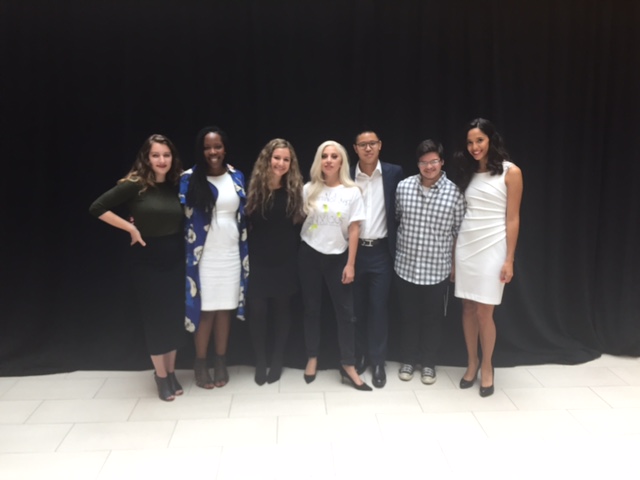
From Christopher Rim:
“When you leave tonight don’t leave loving me more, leave loving yourself more,” said Lady Gaga to the audience at her Monster Ball Tour in September of 2010. I found myself impressed by her authenticity and connection to the crowd.
For the rest of my high school career and my first semester at Yale, I had a duty to uphold: to broadcast Lady Gaga’s message to the world and allow all people to express their true selves without any hesitation. The next step was determining how to accomplish this.
After much research on Yale’s campus, I stumbled upon the Yale Center for Emotional Intelligence. On October 11, 2013, I emailed Professor Marc Brackett asking to him to share his experience as a member of the Research Advisory Board of Born This Way Foundation. Seven minutes later, Dr. Brackett responded enthusiastically and became my mentor for the next three years. Two years later, I was asked to be on the Youth Advisory Board of the foundation, and in that capacity, I had the opportunity contribute to the Emotion Revolution.
The Emotion Revolution started with Dr. Brackett and his team, in collaboration with Born This Way Foundation creating a nationwide survey that asked high school students to share – in their own words – both how they feel (currently) and how they hope to feel in school. The goal was to collect enough data to be able to stress the importance of creating positive learning environments where students’ emotions were valued. The Emotion Revolution Summit was created to share the results with students, educators, and policy makers.
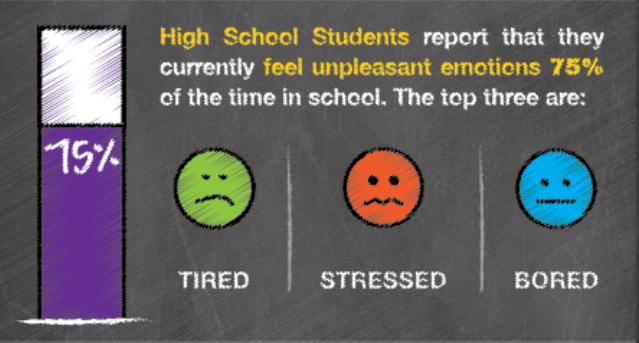
On October 24, 2015 the day of the summit had finally arrived. The morning session was marked by Dr. Brackett launching the outcome of the survey — the results were astonishing. Take a look:
The remainder of the day was filled with workshops and discussions exploring new outlets for students to safely express emotions.
In the afternoon, I had the opportunity to speak on a panel moderated by Soledad O’Brien alongside two high school students and Lady Gaga. When Lady Gaga asked me what changes I hoped to see in the classroom, I utilized what I had learned in Dr. Brackett’s Emotional Intelligence class this semester by encouraging schools to explore RULER – an evidence-based approach to embedding emotional intelligence into the “DNA” of schools. This method calls for students (and educators) to “recognize emotions in themselves and others,” to “understand the causes and consequences of emotions,” to “label emotions accurately,” to “express emotions appropriately,” and to “regulate emotions effectively.”
The teachers and administrators I had in high school always reminded me to follow my passions, learn from my losses, and celebrate my achievements. However, listening to my peers during the Emotion Revolution workshops made me realize that not all teens throughout the United States have this same sense of support at school. Interestingly, research shows that school leaders and teachers need to model the skills of emotional intelligence while they are teaching ig. That way, there is congruence between what adults are modeling and what they are teaching kids to do.
Although the Emotion Revolution Summit has ended, the aim to further a focus on positivity and self-expression is still at play. One project I am currently working on to support this cause is inspirED, a new online resource center on Facebook. Born out of a collaboration with the Yale Center for Emotional Intelligence, inspirED, is a community with lessons, activities, and projects designed by educators, teens, and experts in social and emotional learning (SEL). The goals: to help high school students and educators work together to create the best possible learning communities.
It has now been five years since Lady Gaga’s Monster Ball concert, but I can still hear her words as I further my involvement in the Emotional Intelligence initiative. If there’s one idea that I have taken to heart throughout this whole journey, it is the notion that simply listening to each other can spark a conversation. Dr. Brackett, although extremely busy and very accomplished, took the time to listen and respond to my email. From there, I had the opportunity that many only dream of being part of – a role in a project like the Emotion Revolution.
Imagine what we could achieve in our nation’s schools if educators and students would just simply listen to each other more and find ways to work together to make schools places where everyone feels connected and inspired
From Daniella Cohen:
It has only been a few weeks since the Emotion Revolution and I am still shaking from a discussion I had with Lady Gaga and Soledad O’Brien. Let me take a few steps back:
I was at the Emotion Revolution as a Youth Advisor to Born This Way Foundation. The foundation is working to shine a light on important, yet stigmatized subjects: emotional and mental health. At the Emotion Revolution, Gaga said she wanted “to explode the conversation” about emotions– that is exactly what she did. The weekend began by learning more about the story behind the foundation. Lady Gaga and her mom, Cynthia Germonatta, were honest and bold when sharing their story. The Foundation was started so no child is told they are “just being dramatic” or should “toughen up” when battling negative emotions. I was deeply moved by Lady Gaga’s words; she is a fearless, passionate woman and her genuine character is something I will remember forever. I am humbled that I was able to be a part of her vision.
This summer, I worked with Facebook and the Yale Center for Emotional Intelligence to develop InspirED. InspirED is an emotional health curriculum that directly addresses the findings of a Yale survey. The survey found alarming disparities between the way students currently feel and they way students want to feel in school. Specifically, “When asked how they currently feel in school, out of all the words respondents listed, approximately 75% were negative. The most common words these students used to describe their current emotions at school are ‘Tired’ (39%), ‘Stressed’ (29%), and ‘Bored’ (26%). When asked how they WANT to feel in school the top three emotions that students want to experience more of are ‘Happy,’ Energized,’ and ‘Excited.’”
Later during the closing session, I was on a panel discussion with Lady Gaga, moderated by Soledad O’Brien. The discussion was in response to what we learned at the Emotion Revolution and a recent study by the American Psychological Association. The study found that for the first time ever, the stress levels of teens are higher than the stress levels of adults. The discussion can be watched here: (1:20:00)
Here is what resonates with me:
- Mental and emotional health is just as important as physical health.
- Battling emotions is a silent struggle; often times it is isolating. What I learned at the Emotion Revolution is that there are other people who are battling their emotions. There are resources to get help. We are not alone.
- “Self-care is not selfish.” We deserve the same compassion for ourselves, as we give to others.
- Learn to say, “no.” Our decisions and actions are our vote. Say “yes” to things that promote emotional health and happiness. Say “no” to the things that promote stress.
- Sometimes the small things can cause us immense stress; but the accumulation of small acts of kindness can inspire happiness. Give a few more compliments, tell someone you care about them, or pay it forward- small acts of kindness are easy and can promote the happiness of those around us.
- “How are you?” is a powerful question that I am still learning how to respond to. Don’t have a knee-jerk response such as, “I’m fine.” When asked that question, pause and truly assess your emotions. If you are feeling inspired, say “I am feeling inspired right now!” If you are feeling sad, be brave and do not be afraid to say, “Actually I’m feeling sad right now, but I think I could feel inspired if you help me.”
Let’s start an emotion revolution– explode the conversation about emotional health.

This blog post was written by Bert Jacobs, Life is Good Co-founder and CEO (Chief Executive Optimist)
At Life is Good, we believe that what you focus on will grow. We acknowledge that there are tremendous obstacles that can sometimes obscure the view, whether it’s dealing with bullying, insecurities, or family challenges. But we believe that we all have a choice: to either focus on what’s wrong with our world, or focus on what’s right. Life is not perfect, and life is not easy, but when you focus on what is good, it becomes clear that the keys to happiness are all around you, and when put into action, that empowerment can in turn, lead to a kinder and braver world.
Our community shares a simple, unifying mission: to spread the power of optimism. Optimism empowers us to experience and explore the world with open arms, and enables us to access the ten most important tools we have for living a happy and fulfilling life. We call them the Life is Good Superpowers. Unlike X-ray vision, bullet speed, or Herculean strength, these Superpowers are accessible to us all, and can help you overcome the personal obstacles you may be facing. The Superpowers are: gratitude, creativity, authenticity, love, courage, compassion, simplicity, openness, fun, humor, and today’s focus: compassion.
Just Like Me
The words “Just like me” can be a strong tool in cultivating our compassion for others. It’s a traditional Buddhist practice of framing our interactions. Friend, foe, or stranger—each person we meet is dealing with some level of struggle in his or her life. The practice reminds us “Just like me, this person wants to be happy . . . Just like me, this person has known sadness, suffering, and despair.”
This perspective comes pretty easily when we engage with loved ones, and less so when such relationships are strained. It can also affect ordinary exchanges with strangers. How about the checkout woman overwhelmed by the long, impatient line of customers? Are you the one sighing your frustration from the back of the line, or the one who can lift her with empathy and a kind word when you reach the checkout? Just like you, other people can use every dose of compassion they can get. By lifting others, we can lower the shields many of us raise against the outside world as we grow older.
When it comes to our most contentious relationships, “Just like me” can help us break down barriers, avoid sliding into combative positions, and find common ground and resolution.
Three Ways to Practice Compassion
1) HELP YOURSELF. Remember, compassion begins with kindness to yourself. Make peace of mind a priority. Take time for yourself. Learn to disarm your internal critic by accepting who you are today. Be patient with your stumblings, and don’t dwell on past mistakes. Forgive yourself and move on, with a positive eye toward the future. If you’re struggling through difficult stuff, you may want to enlist the help of a personal coach or a counselor, or give one of the healing arts—like yoga, meditation, and mindfulness practices—a try. Develop self-awareness as a foundation from which you can genuinely understand and empathize with others.
2) JUST LIKE ME. Cultivate your compassion with that simple phrase “Just like me . . .” Just like you, everyone else is fighting some battle, big or small. Just like you, others want to be happy and free of suffering. Keep this in mind as you meet friends and strangers alike—and especially if you’re working on a strained relationship. Remember that even those who seem to “have it all together,” and those who simply drive you nuts, face challenges you don’t fully understand. This broad view enables you to rise above petty squabbles, break down barriers, and more easily seize opportunities to help others.
3) GIVE PRESENCE. Don’t feel as though you need to have all the answers to be of help to someone who’s hurting. Just be yourself and take the time to be with them. Your presence can be more powerful than you think. The action of physically being with someone when they’re hurting can make all the difference in the world.
—–
We’re excited and honored to join Born This Way Foundation at the Emotion Revolution Summit this month to spread the power of optimism in your community. Please continue to focus on the good in yourselves and in each other. For more thoughts on compassion, as well as the nine other Life is Good Superpowers, check out our new book, aptly named Life is Good: The Book.
A portion of this article is excerpted and adapted from the book Life is Good by Bert and John Jacobs, published by National Geographic on September 1st, 2015. Copyright © 2015 The Life is Good Company.

On October 14th, we’re co-hosting a Twitter Chat with the makers of the film The Hunting Ground and Lady Gaga’s co-writer to the song “Til It Happens to You,” Diane Warren. We’ll be discussing campus sexual assault and the steps we must take to end this national epidemic. This is your unique opportunity to hear about the film and the song from their creators.
Amy Ziering, @thehuntinground filmmaker
Amy Ziering is an Academy Award-nominated and two-time Emmy Award-winning documentary filmmaker. Her most recent film, THE INVISIBLE WAR, a groundbreaking investigation into the epidemic of rape in the U.S. military, won the Audience Award at the 2012 Sundance Film Festival, the 2012 Independent Spirit Award for Best Documentary, the 2014 Emmy Awards for Best Documentary and Outstanding Investigative Journalism, Long Form, and was nominated for an Oscar.
Diane Warren, “Til It Happens To You” Co-writer
“Til It Happens To You” songwriter, @Diane_Warren is one of the most continuously prolific and successful contemporary songwriters of our time. A quick glance at her list of Top 10 Hits reveals a range of musical genres and styles so diverse it’s difficult to believe all these songs could have come from the same person; yet, they did. Three decades after she kicked off her career, Diane continues to endlessly pour forth songs that keep climbing to the top of the charts. Diane’s songs are featured in more than 100 motion pictures and have been nominated for 7 Academy Awards, 5 Golden Globes and 12 GRAMMYs. In the past four years she has garnered four Grammy nominations, and penned original songs for such films as Dolphin Tale 2, Silver Linings Playbook, Unfinished Song, Never Say Never, Winnie Mandela, and Beyond The Lights for which she received her seventh Oscar nomination.
Maya Enista Smith, Director, Impact + Operations @BTWFoundation
Born This Way Foundation is committed to supporting the wellness of young people and empowering them to create a kinder and braver world. We achieve this by shining a light on real people, quality research, and authentic partnerships.
When: October 14th at 7PM EST, 4PM PT
Where: Online! Follow: #EndAssaultChat and #EndSexualAssault